

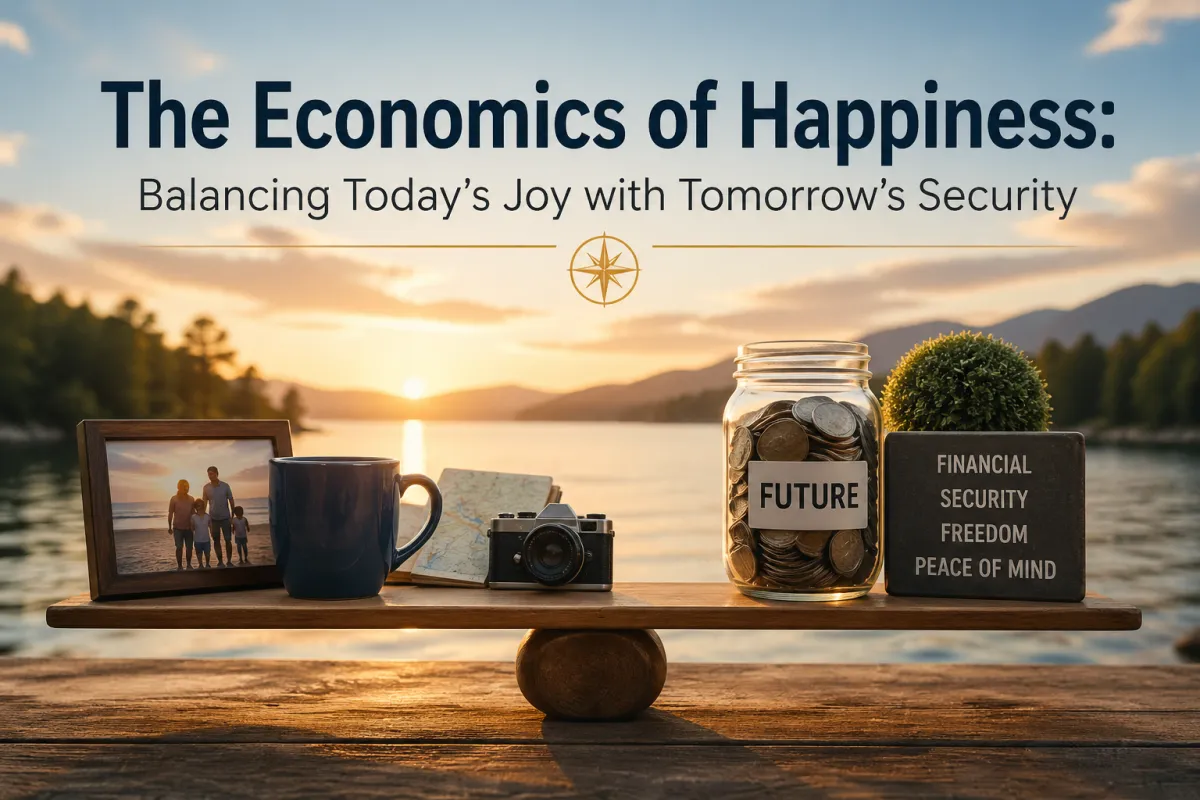
The Economics of Happiness: Balancing Today’s Joy with Tomorrow’s Security
The Economics of Happiness: Balancing Today’s Joy with Tomorrow’s Security
What does it really mean to live a financially successful life?
For many, the answer seems straightforward. Save diligently, invest wisely, and build enough wealth to retire comfortably. But beneath the spreadsheets and portfolio balances lies a deeper question:
Are you actually enjoying your life along the way?
The real challenge is not just growing wealth. It is learning how to balance present happiness with future financial stability.
The Problem: When Numbers Take Over
We believe many investors become overly focused on short-term market movements. They check their portfolios frequently and react to daily changes as if each fluctuation determines long-term success.
This approach can be misleading.
Short-term performance does not always reflect long-term outcomes. For example, during certain multi-year periods, a significant portion of individual stocks may decline in value even while diversified investment strategies produce positive overall returns.
The issue is not the data itself. It is how people interpret and respond to it.
Focusing too heavily on isolated losses can distract from broader progress and long-term objectives.
Behavioral Challenges in Investing
Investor behavior plays a significant role in financial outcomes.
It is common for individuals to:
Increase investments after markets have performed well
Reduce exposure during periods of market decline
These actions are often driven by emotion rather than a long-term strategy.
While it may feel intuitive to react to market conditions, consistently attempting to time entry and exit points can lead to missed opportunities and inconsistent results. Maintaining a disciplined approach over time is generally more effective than reacting to short-term volatility.
The Value of Objective Guidance
A comprehensive financial plan is not limited to investment selection. It also involves managing behavior and decision-making.
Working with a qualified financial professional can provide an objective perspective, helping investors stay aligned with their long-term goals during periods of uncertainty.
It is important to note that not all advice is the same. Investors should ensure they are working with professionals who act in their best interest and provide guidance based on their individual circumstances.
Using Automation to Support Consistency
One practical way to reduce emotional decision-making is through automation.
Automating contributions to retirement accounts and savings plans can help:
Encourage consistency
Reduce the impact of short-term decision-making
Support long-term financial discipline
This approach allows individuals to focus less on timing decisions and more on maintaining a structured plan.
The Importance of Time and Compounding
Time is a critical factor in long-term investing.
Compounding allows investment returns to build upon themselves over extended periods. Starting earlier can significantly enhance long-term outcomes, even if the initial contributions are modest.
Individuals who begin saving earlier often benefit from this effect more than those who delay, even if the latter contribute larger amounts over time.
Balancing Saving and Spending
While some individuals struggle with overspending, others may become overly cautious and hesitate to use their savings.
It is not uncommon for retirees to limit spending due to concerns about running out of money, even when their financial situation may support a more flexible approach.
Research suggests that individuals with reliable income sources in retirement may feel more comfortable spending, as they have greater confidence in their financial stability.
A well-structured financial plan can help determine appropriate spending levels while maintaining long-term sustainability.
Prioritizing Meaningful Experiences
Many individuals find greater satisfaction from experiences rather than material purchases.
Travel, time with family, and personal interests often contribute more to long-term fulfillment. However, these priorities should be incorporated into a financial plan to ensure they are sustainable.
Planning for these goals in advance allows individuals to enjoy them without compromising financial security.
A Balanced Approach to Financial Planning
Effective financial planning is not about extremes. It is about creating a balance between present enjoyment and future needs.
This includes:
Maintaining a long-term investment strategy
Avoiding reactive decision-making
Automating savings where appropriate
Planning for both essential expenses and discretionary goals
Financial decisions should align with personal values and long-term objectives.
Important Considerations
This material is for informational purposes only and should not be considered investment, tax, or legal advice. Individual circumstances vary, and readers should consult with a qualified financial professional before making any financial decisions.
Past performance does not guarantee future results. All investments involve risk, including the potential loss of principal.
Final Thoughts
Financial planning is not solely about accumulating wealth. It is about creating a framework that supports both security and quality of life.
A thoughtful approach allows individuals to:
Prepare for future needs
Make informed financial decisions
Enjoy meaningful experiences along the way
Ultimately, the goal is not just to build wealth, but to use it in a way that supports a fulfilling and sustainable life.


Facebook
LinkedIn
Youtube
Instagram
X